
What Are Gutter Repairs?
Gutter repairs put right the physical faults that stop a gutter carrying water to its outlet, even when it is perfectly clean. The most common are brackets that have snapped or worked loose, so a length drops and bows; a run that has lost its fall and now slopes back towards a stop end; a gutter that has pulled away from a rotten fascia; and cracked or split lengths, often caused by a ladder leaning on plastic guttering or by years of UV making old uPVC brittle.
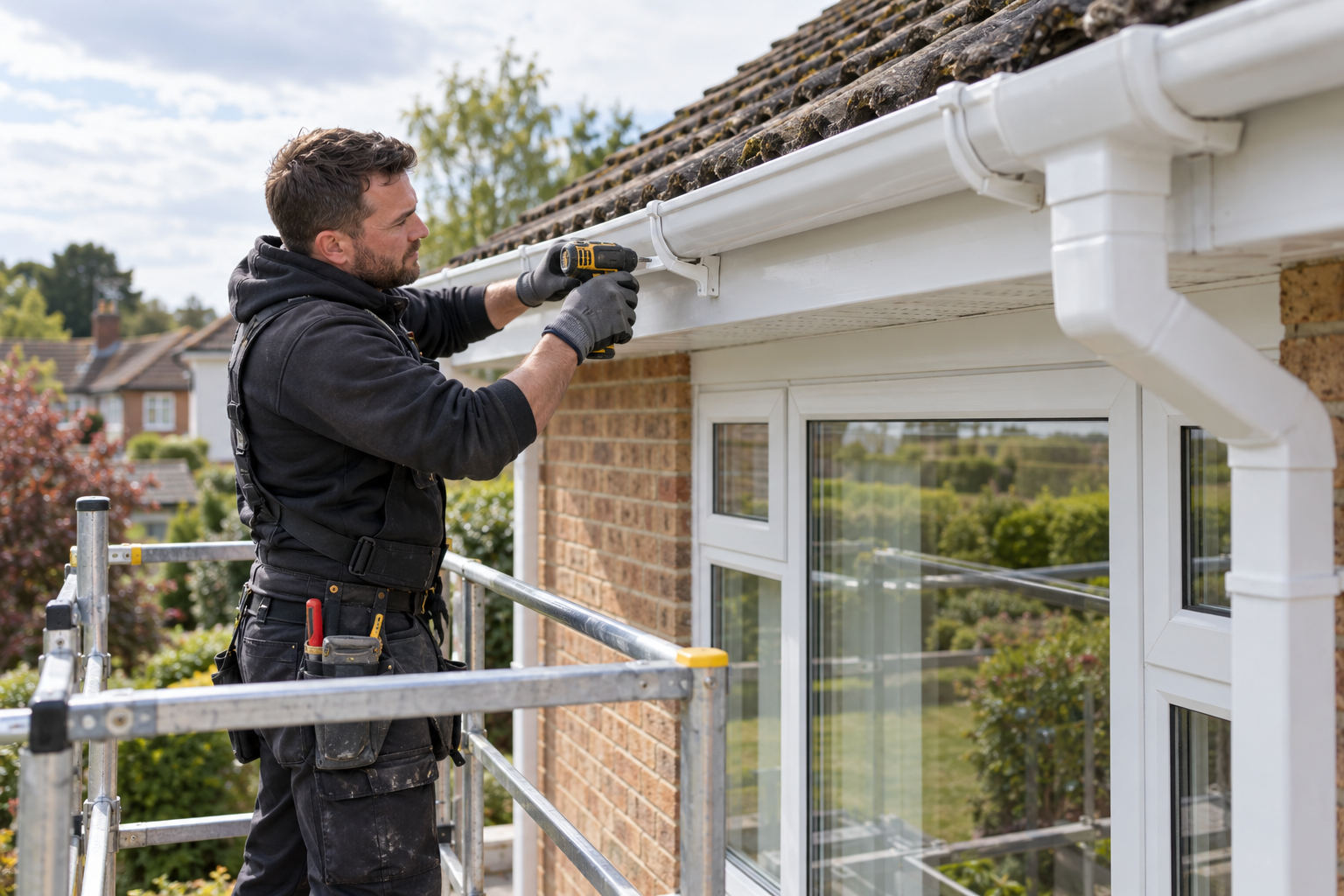
Many of these faults are found during a gutter clean. Repairs are usually far cheaper than replacing the whole system, provided the rest of the guttering is sound and spare parts in the same profile are still available.
Signs You Need Gutter Repairs
- A section visibly dips between brackets, or the gutter line looks wavy from the street
- Water sits in the gutter after rain and drains towards the wrong end
- A gap has opened between the gutter and the fascia board, or between the gutter and the roof edge
- A crack or split is visible in a plastic length, often near a bracket or where a ladder has rested
- Brackets are rusted through, missing or hanging loose
- Water overflows even though the gutter was cleaned recently
Gutter Repair Options Explained
- Re-bracketing — adding or replacing fascia brackets so they sit no more than about a metre apart (closer on cast iron and at corners), which supports the gutter and stops it bowing.
- Re-aligning the fall — taking down and re-fixing a run with a slight, consistent slope towards the outlet. A common rule of thumb is a fall of a few millimetres per metre.
- Replacing a length — cutting out a cracked section and fitting a new length with unions either side. The new section needs to match the existing profile (half-round, square, ogee or deep-flow) to connect cleanly.
- Cast iron repairs — older properties may have cast iron gutters that can be re-bolted, re-sealed and repainted, or have a corroded length replaced with a new casting in the same profile.
- Fascia-related repairs — where the gutter has pulled away because the timber fascia has rotted, the bracket fixing point must be repaired or the board renewed before the gutter can be re-hung securely.
What to Include When Asking for a Quote
Describe what the gutter is doing rather than just saying it needs repairing. A sag between two brackets, a run sloping away from the downpipe and a length that has dropped off the fascia altogether are three different jobs with different materials. Photos from the ground at both ends of the problem section help a specialist judge the fall and see the bracket spacing.
Tell the company what the gutters are made of and their shape if you can. Matching a common uPVC half-round or square-line profile is easy; matching an older, discontinued plastic profile or a cast iron ogee may mean sourcing an adaptor or a casting. If the fascia boards are painted timber, mention any soft or flaking areas you can see, as rotten timber cannot hold new brackets.
A useful written quote should say how many brackets and lengths will be replaced, whether the existing gutter will be re-hung to a new fall, and whether a clean of the affected run is included. Ask what happens if the fascia turns out to be rotten once the gutter is down, and how that extra work would be priced and agreed.
How Much Do Gutter Repairs Cost?
| Repair | Typical cost |
|---|---|
| Replace a few brackets and re-fix a short sagging section | £90 – £180 |
| Re-hang a full run to a new fall, or replace one or two lengths | £180 – £300 |
| Cast iron repairs, three-storey access or several runs | £300 – £400+ |
If several runs are failing, or the profile is no longer made, full replacement may be more cost-effective than repeated repairs. Ask the specialist to explain both options.
The Gutter Repair Process: What to Expect
- Inspection. The specialist checks the bracket spacing, fall, fascia condition and the profile of the existing gutter.
- Clearing. Debris is removed from the affected run so it can be handled safely and inspected properly.
- Taking down. Loose or sagging lengths are unclipped, and failed brackets are unscrewed.
- Re-fixing. New brackets are set out along a string line to give a consistent fall, and the gutter is re-hung or new lengths fitted.
- Water test. Water is run along the gutter to check it flows to the outlet without ponding or leaking at the new joints.
Do I Need Planning Permission for Gutter Repairs?
Like-for-like gutter repairs do not normally need planning permission or building regulations approval. On a listed building, changing the material or profile — for example replacing cast iron with plastic — may need listed building consent, and properties in some conservation areas can be subject to Article 4 directions that restrict changes to the front elevation. If in doubt, check with your local planning authority before work starts; Historic England has guidance for owners of older properties.
How to Choose a Gutter Repair Specialist
- Can they source parts that match your existing profile and colour?
- Will they check the fascia condition and tell you if it needs work first?
- Do they re-hang gutters to a measured fall rather than just adding brackets?
- Do they offer a guarantee on the repaired section?
- Are they insured for work at height, and how will they reach the gutters?
Frequently Asked Questions
Why is my gutter sagging?
Usually because brackets are too far apart, have snapped or have pulled out of the fascia. The weight of wet debris and standing water speeds the problem up.
Can a sagging gutter be fixed without replacing it?
Yes, in most cases. Adding brackets and re-hanging the run to a proper fall will fix a sag, provided the gutter itself is not cracked or brittle.
Can old cast iron gutters be repaired?
Often, yes. Cast iron can be cleaned, re-bolted, re-sealed and repainted, and individual corroded lengths can be replaced with new castings.
How much do gutter repairs cost?
Most gutter repairs cost between £90 and £400, depending on how many brackets or lengths are replaced, the material and how high the gutter is.