
What Is Gutter Guard Installation?
Gutter guard installation means fitting a barrier into or over the gutter that lets rainwater through but keeps leaves, twigs, pine needles and nesting birds out. Guards are always fitted to a freshly cleaned gutter, and on the right property they can stretch the gap between cleans from every year to every few years. They are most useful on homes surrounded by deciduous trees, on bungalows and extensions where leaves blow straight off neighbouring gardens, and on gutters that are awkward or expensive to reach.
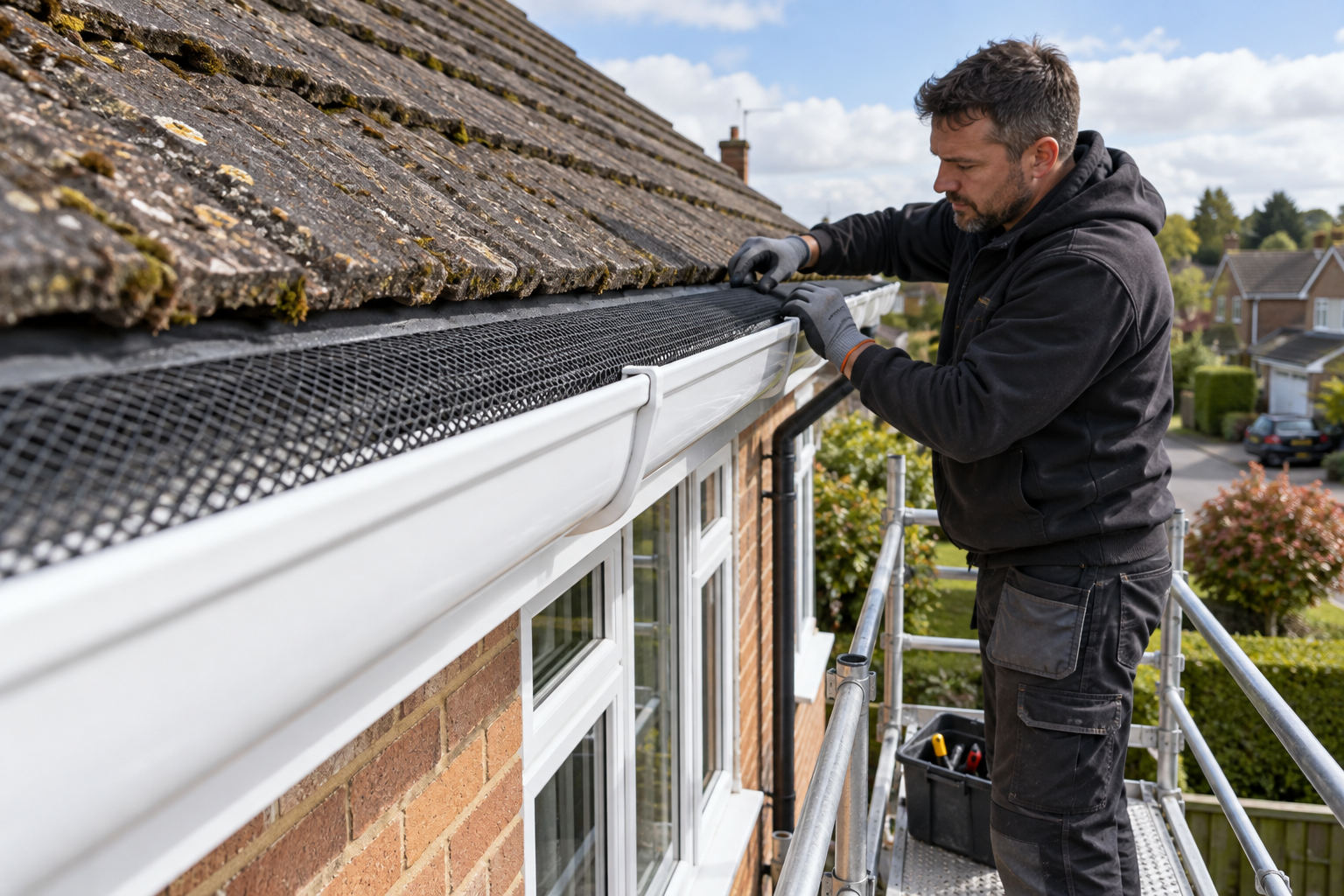
Guards are not maintenance-free. Fine material such as tile grit, seed husks and pine needles can still get through or settle on top, so the guards themselves need occasional checking and brushing off.
Signs You Need Gutter Guards
- Your gutters block again within months of being cleaned, usually every autumn
- Large trees overhang the roof or stand close enough to drop leaves on it
- Birds, especially starlings and sparrows, nest in the gutters or behind the fascia each spring
- The gutters are high or difficult to reach, so each clean is costly
- Seedlings and weeds keep taking root in the silt along the gutter line
- You want fewer visits to a gutter above a conservatory, glass roof or flat roof that is hard to work around
Gutter Guard Types Explained
- Brush guards — cylindrical bristle brushes laid inside the gutter. They are quick to fit and suit curved half-round gutters, but leaves can lodge in the bristles and they need lifting out to clean.
- Plastic or metal mesh — rigid or roll mesh clipped over the top of the gutter. A fine stainless or aluminium micro-mesh keeps out smaller debris such as pine needles and tile grit; coarser plastic mesh is cheaper but lets more through.
- Foam inserts — porous foam strips that fill the gutter so debris sits on top and blows away. They are inexpensive, but they can clog with fine silt and may need replacing after a few years.
- Outlet guards and balloon cages — small domed cages fitted into each outlet or downpipe top. They are a low-cost way to protect downpipes, though debris can still build up in the gutter around them.
What to Include When Asking for a Quote
Guards are priced by the metre, so give an idea of how much guttering there is — a rough count of house frontage and rear plus any extensions is enough for a first price. Say what profile the gutters are (half-round, square, ogee or deep-flow) and what they are made of, because many guards are designed for a particular shape and some cast iron gutters need a different fixing method.
The type of tree nearby decides the type of guard. Broad leaves from oak, sycamore or horse chestnut are stopped by most products, but pine and larch needles, cherry blossom and fine seeds call for a micro-mesh. If birds are a problem, mention where they get in — through the gutter or under the bottom row of tiles — as a guard alone may not keep them out of the eaves.
Ask each company whether the price includes a full clean and flush before fitting, which product and mesh size they propose, how it is fixed to the gutter without lifting the bottom row of tiles, and what checks or cleaning the guards will need afterwards. A clear quote will also say whether conservatory, porch and garage gutters are included.
How Much Does Gutter Guard Installation Cost?
| Job | Typical cost |
|---|---|
| Brush or foam guards on a bungalow or small terrace | £300 – £500 |
| Clip-on mesh guards on a two-storey semi or detached house | £500 – £850 |
| Stainless micro-mesh, large detached or three-storey property | £850 – £1,200+ |
Prices normally include a full gutter clean before the guards go in. Outlet cages alone are much cheaper and are often added to a standard clean for a small extra charge.
The Gutter Guard Installation Process: What to Expect
- Survey and measure. The installer measures the gutter runs, checks the profile and looks at the trees and roof covering above.
- Full clean. Every gutter is cleared and each outlet flushed so nothing is trapped beneath the guards.
- Repairs if needed. Any sagging section or leaking joint is put right first, as it is harder to reach once guards are on.
- Fitting. Guards are cut to length and fitted along each run, with corners, outlets and stop ends finished neatly.
- Water test and handover. Water is run over the guards to check it drains, and you are told how and when to check them.
Do I Need Planning Permission for Gutter Guards?
Gutter guards sit inside or just above the existing gutter and do not normally need planning permission or building regulations approval. On a listed building, a visible mesh along a historic cast iron gutter could be considered an alteration to its appearance, so check with the conservation officer first. If birds are already nesting in the gutters, guards cannot be fitted over an active nest; installers will usually plan the work for late summer or autumn, outside the main nesting season.
How to Choose a Gutter Guard Installer
- Which guard type do they recommend for your trees, and why?
- Is a full clean and outlet flush included before fitting?
- How are the guards fixed, and will they affect the roof tiles or the gutter warranty?
- What maintenance will the guards need, and do they offer an inspection visit?
- Is there a product or workmanship guarantee?
- Can they show photos of similar installations on your type of gutter?
Frequently Asked Questions
Do gutter guards really work?
They work well against leaves and twigs and can cut how often gutters need cleaning. Fine debris can still get through or sit on top, so they reduce maintenance rather than ending it.
Which gutter guard is best for pine needles?
A fine stainless or aluminium micro-mesh is the most effective option for pine needles. Brush and foam guards tend to trap needles rather than shed them.
Do gutter guards stop birds nesting?
They stop birds nesting in the gutter itself, but birds getting in under the roof tiles or behind the fascia may need separate eaves protection.
How much does it cost to fit gutter guards?
Most installations cost between £300 and £1,200, depending on the guard type, the length of guttering and the height of the property.